
Our Product
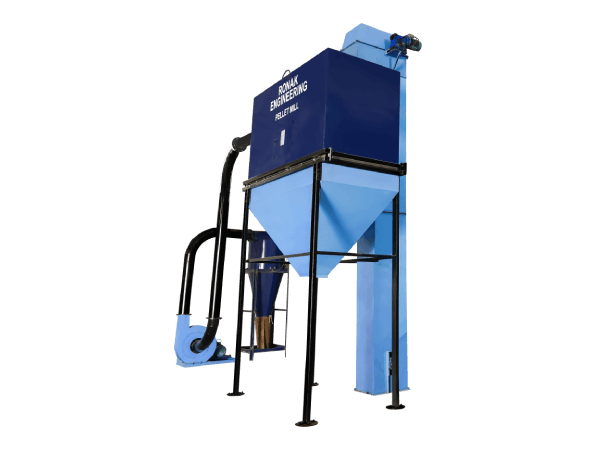
Pellet Cooling System Machine
As the pellets move through the cooling chamber, ambient air or water is used to absorb heat, effectively reducing the temperature of the pellets. This process prevents pellet degradation and ensures uniform cooling, making the pellets suitable for storage and transportation. Pellet cooling systems are crucial for maintaining pellet quality and optimizing production efficiency in biomass pellet plants.
About Machine
Technical Specifications
| Specification | Details |
|---|---|
| Cooling Section Motor with Gear Box | 2 HP |
| Blower Motor | 7.5 HP |
| Elevator Motor with Gear Box | 3 HP |
| Total Power Requirement | 12.5 HP |
FAQs
Frequency Asked Questions
Why is a pellet cooling system necessary in a biomass pellet plant?
A pellet cooling system is necessary because freshly extruded biomass pellets are hot and soft, making them highly vulnerable to degradation. By using ambient air or water to absorb heat in a controlled cooling chamber, the machine ensures uniform cooling, hardens the pellets, and prevents degradation, making them structurally durable for safe storage and transportation.
What are the motor and power specifications of a Ronak Engineering pellet cooling system?
A Ronak Engineering pellet cooling system requires a total power setup of 12.5 HP. This operational framework is driven by three dedicated components: a 2 HP cooling section motor equipped with a gear box, a 7.5 HP blower motor to circulate cooling air, and a 3 HP elevator motor with a gear box to manage material transport.
How does an industrial pellet cooling machine maintain pellet quality?
An industrial pellet cooling machine maintains quality by dropping pellet temperatures uniformly as they pass through the chamber. This eliminates internal moisture and residual thermal stress quickly and efficiently, optimizing production speeds and ensuring the final product meets commercial storage requirements without breaking down.
Have Any Questions?