
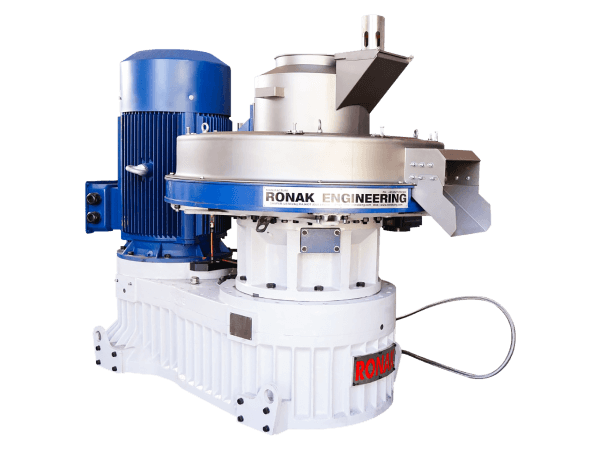
Our Product
Vertical Ring Die Pellet Machine
A vertical ring die pellet machine is a specialized equipment used to produce high-quality biomass pellets efficiently. It features a vertical design with a rotating die and stationary rollers, allowing for uniform pressure and consistent pellet density. The raw materials, such as sawdust or agricultural residues, are fed into the machine’s chamber where they are compressed by the rotating die and rollers. This compression process creates pellets of uniform size and shape. Vertical ring die pellet machines are known for their high productivity, low energy consumption, and durability. They are widely used in biomass pellet production for applications such as heating, power generation automatic boiler industries, etc.
About Machine
Technical Specifications
| Specification | Details |
|---|---|
| Feeding Raw Material Size | Less than 6mm |
| Moisture Content of Raw Material | Up to 10% moisture content required |
| Production Capacity | 1500 to 2000 Kg/hr |
| Pellet Diameter | 8mm & 6mm (Cylindrical) |
| Pellet Length | 20mm to 50mm |
About Machine
Electricity Requirement
| Electricity Requirement | Details |
|---|---|
| Power Connection | 181 HP / 134.95 KW |
| Amp Load | 150 – 160 Amp (Approx.) |
| Power Consumption | 65 – 70 Units / Hr |
FAQs
Frequency Asked Questions
What is the production capacity of a vertical ring die pellet machine?
Ronak Engineering's vertical ring die pellet machine features a high production capacity of 1,500 to 2,000 kg per hour. Its specialized vertical design utilizes a rotating die and stationary rollers to apply uniform pressure, turning raw agricultural waste or sawdust into high-density pellets efficiently.
What size pellets can a vertical ring die mill produce, and what raw materials does it need?
A vertical ring die mill produces cylindrical pellets with a diameter of either 6mm or 8mm, and an adjustable length between 20mm and 50mm. To function optimally, the feeding raw materials must be pre-processed to a size of less than 6mm with a strict moisture content of up to 10%.
What are the power connection and electricity requirements for an industrial vertical ring die pelletizer?
An industrial vertical ring die pelletizer from Ronak Engineering requires a robust power connection of 181 HP (134.95 KW) with an approximate amp load of 150 to 160 Amp. Despite the high-capacity output, the system is designed for low energy consumption, utilizing 65 to 70 units of electricity per hour.
Get Consultations