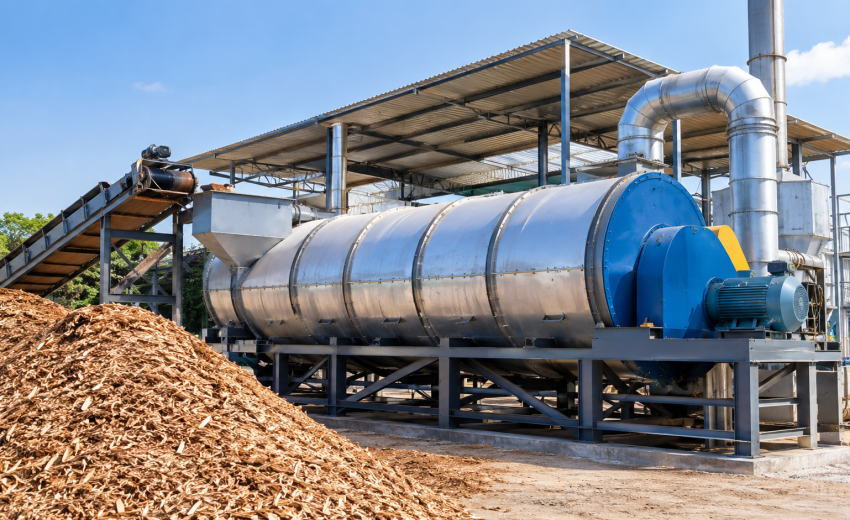
Choosing the right industrial drying machine is important for producing high-quality biomass briquettes and pellets. A suitable dryer removes excess moisture from raw materials, improves fuel quality, supports smooth production, and helps control operating costs. However, the best dryer depends on the type of biomass, initial moisture content, production capacity, available heat source, and required final moisture level.
For biomass business owners in Rajkot, India, selecting suitable biomass drying technology can make a significant difference in daily production. Whether you process sawdust, groundnut shells, rice husk, wood chips, or agricultural waste, understanding different industrial dryer types will help you make a better investment.
Why Is a Biomass Dryer Important for Industrial Production?
Biomass materials often contain moisture because of their natural condition, harvesting, storage, and transportation. Excess moisture can create problems during briquetting and pellet production.
A biomass dryer reduces the moisture content before the material enters the next processing stage.
Key benefits of using an industrial biomass dryer
- Improved fuel quality: Proper drying helps produce consistent biomass briquettes and pellets.
- Better production performance: Suitable moisture levels support smoother processing and reduce feeding problems.
- Improved combustion: Lower moisture generally helps biomass fuel burn more efficiently.
- Reduced storage problems: Properly dried material is less likely to develop mould or spoilage under suitable storage conditions.
- Better process control: Consistent moisture helps maintain more stable production conditions.
- Reduced material wastage: Controlled drying helps prevent problems caused by uneven moisture.
A well-selected industrial drying machine is therefore an important part of a biomass processing plant.
What Are the Different Types of Biomass Dryers?
Different industrial dryer types are designed for different materials, moisture levels, and production requirements. Before selecting equipment, biomass manufacturers should understand how each dryer works.
1. Rotary Drum Dryer
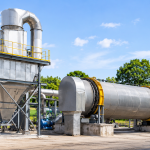
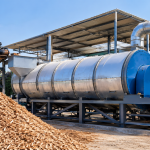
A rotary drum dryer is commonly used in industrial biomass processing. It consists of a rotating cylindrical drum through which biomass moves while coming into contact with a heated drying medium.
Main features:
- Suitable for many bulk biomass materials.
- Handles continuous industrial operations.
- Can process different feedstock sizes.
- Supports large-scale drying requirements.
- Requires proper control of temperature and airflow.
Common applications: Sawdust, wood chips, agricultural residues, and other suitable biomass materials.
2. Flash Dryer
A flash dryer uses a fast-moving stream of hot air to remove moisture from small biomass particles. The material travels through a drying duct and is separated from the air using suitable collection equipment.
Main features:
- Rapid drying process.
- Suitable for finely processed biomass.
- Short material residence time.
- Can be integrated into continuous production lines.
- Requires suitable dust collection and fire-safety systems.
Common applications: Fine sawdust, powdered biomass, and other small-particle materials.
3. Belt Dryer
A belt dryer moves biomass through a heated drying chamber on a conveyor belt. Hot air passes through or around the material to remove moisture.
Main features:
- Suitable for controlled and gradual drying.
- Can handle materials spread in a thin layer.
- Supports continuous processing.
- Allows adjustment of drying time and airflow.
Common applications: Selected agricultural residues, wood chips, and other materials suitable for belt-based handling.
4. Fluidized Bed Dryer
A fluidized bed dryer uses heated air flowing upward through biomass particles. The airflow suspends and mixes the particles, helping transfer heat and remove moisture.
Main features:
- Good contact between heated air and particles.
- Can provide relatively uniform drying with proper operation.
- Suitable for controlled particle-based processes.
- Requires appropriate particle size and airflow management.
Common applications: Small, uniform biomass particles and selected industrial materials.
Comparison of Different Industrial Dryer Types
Dryer type | Main advantage | Suitable material |
Rotary drum dryer | Handles bulk materials | Sawdust and wood chips |
Flash dryer | Fast drying | Fine biomass particles |
Belt dryer | Controlled gradual drying | Agricultural residues |
Fluidized bed dryer | Good air-material contact | Small uniform particles |
The right industrial drying machine should be selected according to the feedstock characteristics and actual production requirements rather than price alone.
How to Choose the Right Biomass Dryer for Industrial Use?
Selecting the correct biomass dryer requires careful evaluation of your production process. Consider the following factors before purchasing an industrial drying machine.
1. Understand the Raw Material
Different biomass materials have different physical properties. Sawdust, groundnut shells, rice husk, wood chips, and other agricultural residues do not behave in the same way during drying.
Check the following:
- Particle size and shape.
- Initial moisture content.
- Bulk density.
- Material flow characteristics.
- Sensitivity to heat.
For example, fine sawdust may be suitable for a flash drying system, while larger or mixed biomass materials may require a different dryer design.
2. Check the Initial and Final Moisture Content
Moisture content is one of the most important factors in biomass drying.
Before choosing a dryer, determine:
- How much moisture is present in the incoming material?
- What final moisture level is required?
- How much water must be removed per hour?
- Will the moisture level change between batches?
Do not choose a dryer based only on its advertised capacity. Calculate the actual water-removal requirement.
3. Calculate Production Capacity
The dryer must match the capacity of your biomass processing plant.
For example, if your production line processes several tonnes of raw material daily, the drying system should handle the required feed rate without creating a production bottleneck.
Check:
- Input capacity per hour.
- Water evaporation capacity.
- Daily operating hours.
- Expected production growth.
- Compatibility with the briquetting or pellet production line.
4. Evaluate Energy Consumption
Drying requires thermal energy, so energy consumption directly affects operating expenses.
Look for an industrial drying machine that offers:
- Efficient heat transfer.
- Proper insulation.
- Controlled hot-air circulation.
- Heat recovery options where practical.
- Suitable fuel or heat-source compatibility.
Using available waste heat from an industrial process may also help reduce energy costs when the system can be safely integrated.
5. Consider Maintenance Requirements
A dryer should be easy to inspect, clean, and maintain. Frequent breakdowns can interrupt production and increase operating costs.
Before purchasing, ask about:
- Maintenance intervals.
- Spare-parts availability.
- Motor and fan requirements.
- Cleaning and inspection access.
- Technical support and servicing.
6. Check Safety Features
Biomass dust can create fire and combustible-dust hazards under certain conditions. High-temperature equipment also requires proper safety controls.
Important safety considerations include:
- Temperature monitoring.
- Emergency shutdown systems.
- Suitable dust collection.
- Fire detection and suppression provisions.
- Proper ventilation.
- Grounding and electrical safety.
- Safe handling of hot materials.
The final safety arrangement should follow the applicable equipment standards and a site-specific risk assessment.
Which Factors Affect Biomass Dryer Efficiency?
Biomass dryer efficiency depends on how effectively the machine transfers heat and removes water from the raw material.
Several factors can influence the drying process.
Important factors affecting drying performance
- Initial moisture: Materials with higher moisture usually require more energy and drying time.
- Particle size: Smaller particles generally provide more exposed surface area, although excessively fine material can increase dust-handling challenges.
- Airflow: Proper airflow helps remove water vapour from the drying chamber.
- Temperature: The drying temperature must match the material and equipment design.
- Residence time: Biomass must remain in the dryer long enough to reach the required moisture level.
- Heat loss: Poor insulation and inefficient heat transfer can increase energy consumption.
- Material feeding: Uneven feeding can result in inconsistent drying.
Good biomass drying technology focuses on maintaining suitable temperature, airflow, and material movement rather than simply increasing heat.
How to Calculate the Moisture Removal Requirement?
Before purchasing an industrial drying machine, calculate how much water needs to be removed from the raw biomass.
A simple example can help explain the process.
Example:
Suppose a biomass plant receives 1,000 kg of raw material with 30% moisture content on a wet basis. The required final moisture content is 10%.
- Initial material weight = 1,000 kg
- Initial water weight = 300 kg
- Dry solid weight = 700 kg
- Final material weight = 700 ÷ 0.90 = 777.78 kg
- Final water weight = 77.78 kg
Water to be removed:
300 − 77.78 = 222.22 kg
Therefore, approximately 222.22 kg of water must be removed to reduce the moisture content from 30% to 10%.
This is a simplified calculation. Actual equipment selection should also consider feed variation, heat losses, operating hours, and dryer performance.
What Is the Best Biomass Dryer for Your Business?
There is no single industrial dryer that is suitable for every biomass business. The correct choice depends on the raw material, production scale, moisture level, and available energy source.
Consider these general recommendations:
Business requirement | Dryer to evaluate |
Bulk biomass processing | Rotary drum dryer |
Fine sawdust drying | Flash dryer |
Gradual controlled drying | Belt dryer |
Small, uniform particles | Fluidized bed dryer |
These are starting points, not fixed rules. A material trial and technical assessment should be completed before finalizing the equipment.
Why Choose Ronak Engineering for Biomass Processing Solutions?
Choosing suitable biomass processing equipment is an important step for businesses planning to manufacture biomass briquettes and pellets.
Ronak Engineering is based in Rajkot, India, and works in the biomass machinery sector. Businesses evaluating an industrial drying machine should consider equipment compatibility, production requirements, technical support, and long-term operating costs.
Before finalizing a machine, discuss the following requirements with your equipment supplier:
- Type of biomass raw material.
- Initial and required final moisture content.
- Expected production capacity.
- Available heat source.
- Space and installation requirements.
- Maintenance and operating requirements.
- Integration with existing briquetting or pellet machinery.
Ronak Engineering can be considered as a machinery supplier for businesses exploring biomass processing solutions. Request technical details and confirm machine specifications according to your actual production needs.
Conclusion
Selecting the best industrial drying machine requires more than comparing equipment prices. Biomass business owners should evaluate raw material properties, moisture content, drying capacity, energy consumption, maintenance, and safety before making a decision.
Rotary drum, flash, belt, and fluidized bed dryers each offer different advantages. The best option depends on the material being processed and the production requirements.
For biomass manufacturers in Rajkot, India, investing in suitable biomass drying technology can support consistent production and better control over fuel quality. A proper technical assessment will help you select an industrial dryer that meets your business requirements.
Frequently Asked Questions (FAQs)
1. What is an industrial drying machine used for in biomass production?
An industrial drying machine removes excess moisture from biomass materials such as sawdust, wood chips, rice husk, and agricultural waste before further processing into briquettes or pellets.
2. What are the different types of biomass dryers?
Common biomass dryer types include rotary drum dryers, flash dryers, belt dryers, and fluidized bed dryers. Each type is suitable for different materials and production requirements.
3. How to choose the right biomass dryer for industrial use?
Consider the raw material, initial moisture content, required final moisture, production capacity, energy consumption, maintenance requirements, and safety features before selecting a dryer.
4. Why is moisture content important in biomass drying?
Moisture content affects drying energy requirements, material handling, storage stability, and the performance of biomass fuel during combustion. Proper moisture control supports consistent product quality.
5. Which biomass dryer is suitable for sawdust?
Rotary drum and flash dryers are commonly considered for sawdust drying. The final choice depends on particle size, initial moisture, required output, and production capacity.