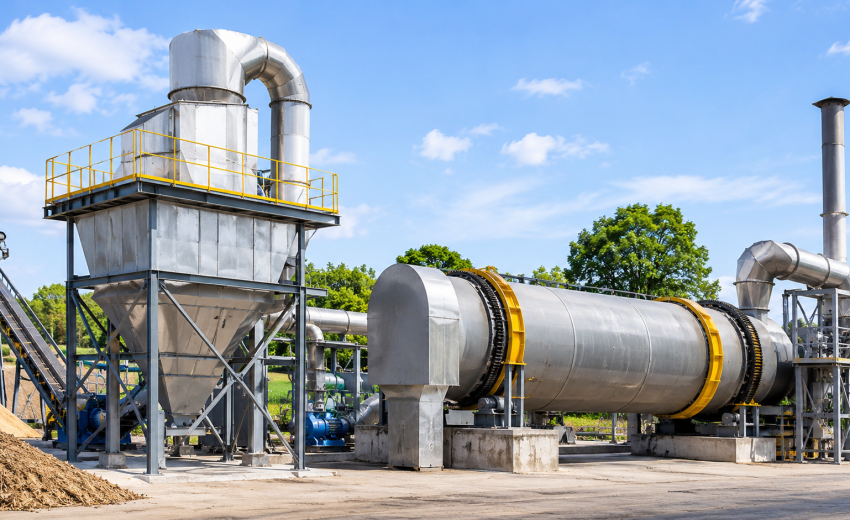
Choosing the right biomass drying machine is important for producing high-quality biomass briquettes and pellets. Raw materials such as sawdust, wood chips, rice husk, groundnut shells, and agricultural waste often contain moisture that must be reduced before further processing. A flash dryer and a rotary dryer are two common drying systems used in biomass processing. Both remove moisture, but they work differently and suit different production requirements.
A flash dryer is generally suitable for quickly drying fine and small-sized materials, while a rotary dryer is often preferred for continuous processing of larger quantities and a wider range of material sizes. The right choice depends on raw material, initial moisture, required output, available space, energy consumption, and production capacity.
For biomass businesses in Rajkot, India, understanding these differences can help improve production efficiency and control operating costs.
What Is a Biomass Drying Machine?
A biomass drying machine is industrial equipment used to reduce moisture from organic materials before they are converted into biomass briquettes or pellets.
Raw biomass materials may contain excess moisture due to storage conditions, harvesting, transportation, or natural properties. High moisture can affect grinding, briquetting, pellet formation, fuel quality, and production efficiency.
A suitable biomass dryer helps businesses:
- Reduce excess moisture from raw materials.
- Improve the consistency of biomass feedstock.
- Prepare materials for grinding and processing.
- Support better briquette and pellet production.
- Reduce moisture-related production problems.
- Maintain a more consistent final fuel quality.
Common materials processed in biomass dryers include:
- Sawdust
- Wood chips
- Rice husk
- Groundnut shells
- Agricultural waste
- Sugarcane bagasse
- Other suitable biomass residues
What Is a Flash Dryer and How Does It Work?
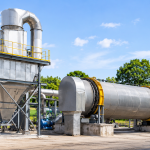
A flash dryer is a high-speed drying system that uses a stream of hot air to remove moisture from small particles of biomass. The material is carried through a drying pipe or chamber by moving hot air.
How does a flash dryer work?
The flash drying process generally follows these steps:
- Raw material feeding: Wet biomass enters the feeding system.
- Hot air generation: A heating system produces hot air at a controlled temperature.
- Material transportation: A fan moves the hot air and biomass particles through the drying pipe.
- Moisture removal: Heat transfers to the material, causing moisture to evaporate.
- Material separation: A cyclone separator or suitable collection system separates dried material from the air.
- Final collection: The dried biomass is collected for further processing.
Benefits of a flash dryer
- Fast moisture removal from suitable fine materials.
- Continuous drying operation.
- Compact drying arrangement compared with some larger systems.
- Suitable for sawdust and other small biomass particles.
- Can integrate with biomass grinding and briquetting lines.
Limitations of a flash dryer
- Material usually needs a suitable particle size.
- Large or uneven particles may require additional processing.
- Airflow and temperature need proper control.
- Dust collection and fire safety require careful attention.
What Is a Rotary Dryer?
A rotary dryer is an industrial drying machine that uses a rotating cylindrical drum to reduce moisture from raw materials. The drum rotates slowly while biomass moves through it and comes into contact with heated air.
It is commonly used in industries that process large quantities of agricultural and biomass materials.
How does a rotary dryer work?
The rotary drying process generally involves these stages:
- Material feeding: Wet biomass enters one end of the rotating drum.
- Drum rotation: The drum rotates continuously to move the material forward.
- Heat transfer: Hot air enters the dryer and transfers heat to the biomass.
- Material movement: Internal lifting flights help lift and distribute the material as the drum rotates.
- Moisture evaporation: Moisture evaporates during contact with the heated air.
- Material discharge: Dried biomass exits through the discharge section.
- Dust collection: Suitable collection equipment helps control dust from the exhaust system.
Benefits of a rotary dryer
- Suitable for continuous industrial production.
- Can handle a range of suitable biomass materials.
- Useful for processing large quantities.
- Provides controlled drying through drum speed and operating conditions.
- Can be integrated into larger biomass processing plants.
Limitations of a rotary dryer
- Usually requires more installation space.
- Needs proper maintenance of rotating components.
- Incorrect operation can lead to uneven drying.
- Requires suitable fuel, airflow, and temperature management.
- Installation and operating costs depend on plant design and capacity.
Flash Dryer vs Rotary Dryer: What Are the Main Differences?
Both machines are designed to remove moisture, but their operating methods, material requirements, and applications are different.
Comparison Factor | Flash Dryer | Rotary Dryer |
Working method | High-speed hot air | Rotating heated drum |
Drying time | Very short | Longer retention time |
Material size | Best suited to fine, small particles | Can handle a wider range of particle sizes |
Material movement | Carried by hot air | Moved by drum rotation |
Production | Continuous | Continuous |
Installation | Generally compact | Generally larger |
Maintenance | Depends on fans, ducts and dust collection | Depends on drum, bearings, drive and other components |
Best application | Fine sawdust and prepared biomass | Sawdust, wood chips and suitable agricultural residues |
Main consideration | Particle size and airflow | Drum capacity and retention time |
The actual performance of either machine depends on its design, material properties, moisture level, and operating conditions. Biomass drying research also highlights the importance of testing the specific raw material before selecting industrial equipment.
Which Biomass Drying Machine Is Better for Your Business?
There is no single machine that is best for every biomass business. Your choice should depend on the type of raw material, production target, moisture content, and available investment.
When should you choose a flash dryer?
A flash dryer may be the right choice when:
- Your business mainly processes sawdust or fine biomass particles.
- You need rapid moisture removal.
- You have a consistent raw material particle size.
- You want a compact drying arrangement.
- Your production process can support high-speed airflow and dust collection.
For example, a biomass manufacturer processing finely ground sawdust may consider a flash dryer before sending the material to a briquetting machine.
When should you choose a rotary dryer?
A rotary dryer may be a better option when:
- You process larger quantities of biomass.
- Your raw materials have different particle sizes.
- You handle suitable wood chips, sawdust, or agricultural residues.
- You need continuous industrial drying.
- You want longer material exposure during drying.
For example, a business handling a mixture of wood chips and sawdust may consider a rotary drum dryer, subject to material testing and equipment specifications.
What Factors Should You Consider Before Buying a Biomass Dryer?
Before investing in a biomass drying machine, evaluate the following factors carefully.
1. Raw material type
Different biomass materials have different physical properties. Sawdust, rice husk, wood chips, and groundnut shells may require different drying arrangements.
Check:
- Material size and shape.
- Initial moisture content.
- Material density.
- Whether the material is sticky or fibrous.
- Whether grinding or screening is required before drying.
2. Initial and final moisture content
Moisture content is one of the most important factors in dryer selection.
Before purchasing, determine:
- How much moisture is present in your raw material?
- What final moisture level does your next processing stage require?
- How much water must be removed per hour?
For example, material entering a dryer at 40% moisture will require a different drying load from material entering at 20%. These are illustrative starting conditions, not universal operating targets.
3. Production capacity
Choose a machine that matches your actual production requirement.
Consider:
- Kilograms of raw material processed per hour.
- Tonnes of water evaporated per hour.
- Daily operating hours.
- Future production expansion.
- Capacity of the connected briquetting or pellet plant.
Do not select a dryer based only on its advertised hourly capacity. Ask the manufacturer to clarify whether the rating refers to wet feed, dry output, or moisture evaporation.
4. Energy consumption
Drying can be a major operating expense in biomass processing.
Compare:
- Fuel consumption.
- Electricity requirements.
- Fan and blower power.
- Heat recovery options.
- Operating hours and maintenance costs.
Research on industrial dryers shows that energy demand varies with dryer type and design. It is not safe to assume that a flash dryer or rotary dryer will always consume less energy.
5. Installation space and maintenance
Your factory layout also matters.
A flash drying system needs suitable space for its ducting, fan, cyclone, and dust collection equipment. A rotary dryer needs room for the drum, feeding arrangement, discharge system, and associated equipment.
Check spare parts availability, access for cleaning, maintenance requirements, and the manufacturer’s service support.
How Does Moisture Control Affect Biomass Briquette Production?
Moisture control plays an important role in the quality of biomass fuel.
If the raw material contains too much moisture, it can cause:
- Difficulty in feeding material into machinery.
- Poor briquette formation.
- Uneven production.
- Additional drying requirements.
- Lower consistency in finished fuel quality.
On the other hand, drying material more than necessary can waste energy and increase operating costs.
The goal is to achieve the moisture level required by the specific briquetting or pelletising process, rather than simply making the material as dry as possible.
A properly selected biomass dryer helps create more consistent feedstock for the next stage of manufacturing.
Why Are Drying Machines Important for Biomass Businesses in Rajkot, India?
Rajkot is an important industrial location in Gujarat, where businesses operate in engineering, machinery manufacturing, and industrial processing.
Biomass manufacturers in Rajkot and nearby industrial areas need suitable drying equipment to process agricultural and wood-based residues efficiently.
Businesses planning a biomass briquette or pellet plant should consider the following:
- Availability of local biomass raw materials.
- Transportation and storage arrangements.
- Seasonal changes in material moisture.
- Fuel and electricity availability.
- Production requirements.
- Access to machinery maintenance and technical support.
Ronak Engineering works in the biomass machinery sector. Businesses exploring biomass processing equipment can consider its machinery offerings and discuss their specific production requirements before selecting a suitable solution.
What Safety Measures Are Important When Using Biomass Dryers?
Biomass materials such as sawdust and agricultural residues can create combustible dust. Drying systems also use heat, so safety must be part of equipment selection and installation.
Important precautions include:
- Install suitable dust collection equipment.
- Use spark detection or spark-arresting arrangements where appropriate.
- Monitor operating temperatures and airflow.
- Prevent dust accumulation around the machine.
- Inspect fans, bearings, motors, and electrical connections regularly.
- Follow the manufacturer’s fire prevention and emergency shutdown procedures.
- Use appropriate explosion protection where the risk assessment requires it.
Both flash and rotary dryers need suitable fire and dust safety measures. Shorter drying time does not eliminate fire risk.
Why Choose the Right Biomass Dryer Manufacturer?
Selecting the right manufacturer is as important as selecting the machine.
Before finalising your purchase, check:
- Experience in biomass machinery manufacturing.
- Machine specifications and production capacity.
- Availability of technical support.
- Installation and commissioning services.
- Spare parts availability.
- Warranty and maintenance support.
- Customisation according to your raw material.
Ronak Engineering can be considered when exploring biomass processing machinery. Discuss your raw material, required moisture reduction, and production target with the manufacturer to identify suitable equipment.
Conclusion: Flash Dryer vs Rotary Dryer – Which One Should You Choose?
Both flash dryers and rotary dryers play an important role in biomass processing.
A flash dryer is suitable for businesses working with fine, consistently sized biomass materials that require rapid drying. A rotary dryer is useful for businesses processing larger quantities and a wider range of suitable material sizes.
Before investing in a biomass drying machine, compare raw material requirements, moisture levels, production capacity, energy consumption, installation space, and maintenance costs.
For biomass businesses in Rajkot, India, making the right equipment decision can help improve production consistency and support long-term business growth.
Ronak Engineering encourages businesses to evaluate their production requirements carefully and choose biomass processing equipment according to their operational needs.
Frequently Asked Questions (FAQs)
1. What is the difference between a flash dryer and a rotary dryer?
A flash dryer uses high-speed hot air to remove moisture from small biomass particles. A rotary dryer uses a rotating drum to move and dry biomass materials through heated air.
2. How does a flash dryer work in biomass processing?
A flash dryer mixes wet biomass with a high-speed stream of hot air. Moisture evaporates during transportation through the drying pipe, and a cyclone or collection system separates the dried material from the air.
3. What is a rotary dryer used for?
A rotary dryer is used to reduce moisture in materials such as sawdust, wood chips, and suitable agricultural residues. It is commonly used in industrial biomass processing plants.
4. Which dryer is better for sawdust?
Both machines can dry sawdust. A flash dryer suits finely processed sawdust, while a rotary dryer handles a wider range of particle sizes. The final choice depends on moisture content and production requirements.
5. How do I choose the right biomass drying machine?
Before purchasing, compare raw material type, initial moisture, required final moisture, production capacity, energy consumption, installation space, maintenance, and total operating costs.