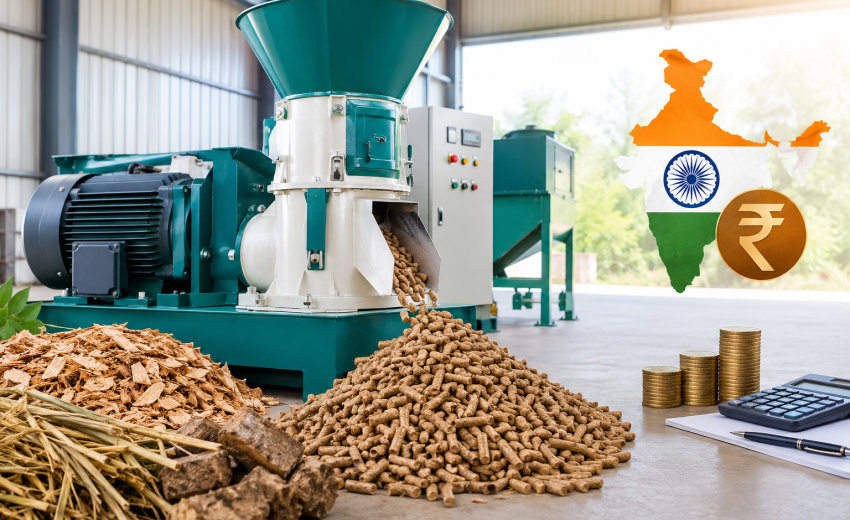
The biomass pellet machine price in India depends on production capacity, raw material type, moisture content, machine design, and automation level. A small pellet machine and a complete industrial pellet production line require very different investments. Buyers should compare machinery specifications, expected output, electricity consumption, maintenance needs, and installation costs before making a decision.
For biomass business owners, choosing the right machine is not only about finding the lowest price. It is about selecting equipment that can process locally available raw materials, produce consistent-quality pellets, and meet customer demand. This guide explains the main pricing factors, operating expenses, and buying considerations to help you plan your investment.
For a detailed understanding of machinery requirements, investment planning, and infrastructure, read our guide on Biomass Pellet Plant Setup in India.
What factors affect biomass pellet machine prices in India?
The biomass pellet machine cost in India varies according to the equipment required for a particular project. A machine that processes dry sawdust may need a different preparation system from one designed for wet agricultural residue.
The following factors have the biggest influence on the final quotation.
1. Production capacity
Production capacity is one of the main factors affecting the biomass pellet machine price. A higher-capacity machine generally requires a larger motor, a stronger feeding system, and components designed for continuous operation.
Before purchasing, decide how much material you need to process per hour. Consider your expected daily production, available raw materials, and confirmed customer demand.
2. Raw material type
Biomass pellet machines can process different materials, including:
- Sawdust and wood waste
- Rice husk and paddy straw
- Wheat straw and other agricultural residues
- Groundnut shells
- Bagasse and selected crop residues
Each material has different physical properties. Some materials need additional shredding, grinding, drying, or conditioning before pellet production. These requirements can increase the overall machinery cost.
3. Moisture content
Raw material moisture affects pellet formation and the performance of the production line. Material that contains excessive moisture may require a drying system before it enters the pellet machine.
Drying equipment adds to the initial investment and operating expenses. For this reason, buyers should test their actual feedstock rather than assume that every raw material can be processed using the same settings.
4. Machine design and automation
Machine design, motor specifications, die configuration, feeding arrangements, and control systems can influence pricing.
Automation also affects the investment. A basic setup may require more manual handling, while a more automated line can include material feeding, conveying, cooling, screening, and packing systems.
Compare the equipment included in each quotation before deciding which option offers the best value.
How much does a biomass pellet machine cost in India?
There is no single price that applies to every biomass pellet machine. The final amount depends on the machine’s capacity, specifications, raw material preparation requirements, and included accessories.
For example, a quotation for the pellet press alone may exclude the dryer, hammer mill, conveyors, cooler, electrical installation, and packaging equipment.
For a useful budget, separate the investment into two categories:
Cost category | What it includes |
Individual machine cost | Pellet press, motor, die, feeding system, and specified accessories |
Complete plant cost | Pellet press, raw material preparation, drying where required, grinding, conveying, cooling, screening, and packing equipment |
Installation costs | Electrical connections, foundations, installation, and commissioning where applicable |
Operating expenses | Raw materials, electricity, labour, maintenance, and transportation |
The figures in a plant-level estimate should not be treated as the price of an individual pellet machine. Request an itemised quotation based on your actual production requirements.
What biomass pellet machine production capacity should you choose?
The right biomass pellet machine production capacity depends on your raw material supply, target customers, available capital, and expected operating hours.
Consider these planning questions before selecting a machine:
- How many kilograms or tonnes of pellets do you plan to produce daily?
- Can you obtain enough suitable raw material throughout the year?
- Do you have enough space for raw material and finished-product storage?
- What output can your customers purchase regularly?
- Can your electrical infrastructure support the required machinery?
- Will you operate one shift or multiple shifts?
Remember that the manufacturer’s rated capacity is not always the same as actual finished-pellet output. Raw material characteristics, moisture, downtime, maintenance, and operating conditions can affect production.
Ask the supplier to clarify the expected output using your specific raw material.
How does the biomass pellet manufacturing process affect machine selection?
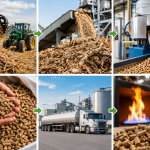
Understanding the biomass pellet manufacturing process helps you identify which equipment your business needs.
The main stages are as follows.
Step 1: Raw material collection and cleaning
Collect suitable biomass, such as sawdust or agricultural residue. Remove stones, soil, metal, and other unwanted materials to protect the machinery and maintain product quality.
Step 2: Size reduction
A chipper, shredder, or hammer mill reduces the material to a suitable particle size. The required equipment depends on the original size and structure of the biomass.
Step 3: Drying
If the raw material contains excessive moisture, a suitable dryer may be necessary. The required moisture level depends on the feedstock and machine specifications.
Step 4: Pelletizing
The prepared biomass enters the pellet mill. Pressure and friction force the material through the die openings, forming pellets.
Step 5: Cooling and screening
Fresh pellets may be hot and fragile. Cooling helps stabilise them, while screening removes loose fines that can sometimes be returned to the process.
Step 6: Storage and packaging
Finished pellets are packed or transferred to suitable storage. Proper handling helps protect the product from moisture and physical damage.
The Government of India’s SAMARTH Mission identifies equipment such as grinders, dryers, hammer mills, and pellet mills as important parts of biomass pellet production. The exact configuration depends on the feedstock and process requirements.
What is the biomass pellet machine operating cost?
The biomass pellet machine operating cost includes the regular expenses required to manufacture and deliver finished pellets.
The main operating expenses are:
Electricity: Motors, grinders, conveyors, pellet presses, and other equipment consume power.
Raw materials: The cost of sawdust, crop residue, rice husk, or other biomass depends on availability, quality, season, and transport distance.
Labour: Workers may be needed for feeding, machine operation, quality checks, packing, and material handling.
Maintenance and spare parts: Dies, rollers, bearings, and other components may require inspection, repair, or replacement depending on usage.
Drying and handling: Fuel or energy for drying, conveying, and storage can increase production costs.
Packaging and transportation: Bags, loading, delivery, and storage should be included when calculating the final cost per tonne.
How to estimate production cost per tonne
Use the following formula:
Production cost per tonne = Total production expenses ÷ Tonnes of finished pellets produced
For example, if your total production expenses are ₹80,000 and you produce 10 tonnes of finished pellets during the same period, your production cost is ₹8,000 per tonne.
This is an illustrative calculation, not a market price or profit estimate. Your actual result will depend on your raw material cost, power consumption, labour, production losses, and other expenses.
How can you choose the right biomass pellet machine?
Before finalising a purchase, compare at least two or three quotations using the same technical requirements.
Use this checklist:
- Confirm your raw material: Tell the supplier exactly which biomass you intend to process.
- Define your target capacity: Specify the required output per hour and operating schedule.
- Check the complete machinery list: Confirm whether grinding, drying, cooling, screening, and conveying equipment are included.
- Ask about power consumption: Request the connected load and expected energy use under specified operating conditions.
- Review pellet quality: Discuss pellet dimensions, durability, moisture, and other customer requirements.
- Check maintenance support: Ask about spare-part availability, service, warranty, and operator training.
- Request an itemised quotation: Separate machinery, installation, freight, taxes, and other charges.
- Calculate your expected production cost: Estimate the cost per tonne before committing to the investment.
For biomass business owners in Rajkot, India, local access to raw materials, transportation, industrial infrastructure, and potential customers should also be considered when planning a plant.
Why choose Ronak Engineering for biomass machinery enquiries?
Ronak Engineering works in the biomass briquetting and pellet machinery sector. Businesses researching a new production line should evaluate machinery based on their feedstock, production targets, site conditions, and operating requirements.
When discussing your requirements with Ronak Engineering, prepare the following information:
- Type of biomass raw material
- Current moisture content, if known
- Required production capacity
- Desired pellet size and application
- Available electricity and space
- Whether you need an individual machine or a complete production line
Providing these details helps the supplier understand your project and prepare a more relevant quotation.
The right buying decision should balance the initial biomass pellet machine price with production performance, operating expenses, maintenance support, and long-term business requirements.
Conclusion
Choosing the right biomass pellet machine requires more than comparing purchase prices. Biomass business owners should evaluate production capacity, raw material preparation, operating costs, maintenance requirements, and the equipment included in the quotation.
Understanding the biomass pellet manufacturing process and calculating the expected cost per tonne can help you make a better-informed investment decision.
If you are planning a new biomass project, contact Ronak Engineering with your raw material details and production target to discuss suitable machinery options and request a project-specific quotation.
Frequently Asked Questions
1. What is the biomass pellet machine price in India?
The price varies according to production capacity, machine design, raw material requirements, automation, and included accessories. Request a quotation based on your actual feedstock and required output.
2. What factors affect biomass pellet machine prices?
The main factors include production capacity, motor power, die configuration, raw material type, moisture content, automation, and the need for supporting equipment such as dryers and hammer mills.
3. Is a biomass pellet machine different from a complete pellet plant?
Yes. A pellet machine forms biomass into pellets. A complete plant may also include raw material preparation, drying, grinding, conveying, cooling, screening, and packaging equipment.
4. How can I reduce biomass pellet machine operating costs?
You can improve cost control by sourcing raw materials efficiently, managing moisture, maintaining equipment, monitoring electricity consumption, reducing avoidable downtime, and improving production planning.
5. How do I choose the right biomass pellet machine production capacity?
Estimate your daily production target, available raw material, customer demand, operating hours, and budget. Then ask the supplier to confirm expected output for your specific feedstock and operating conditions.