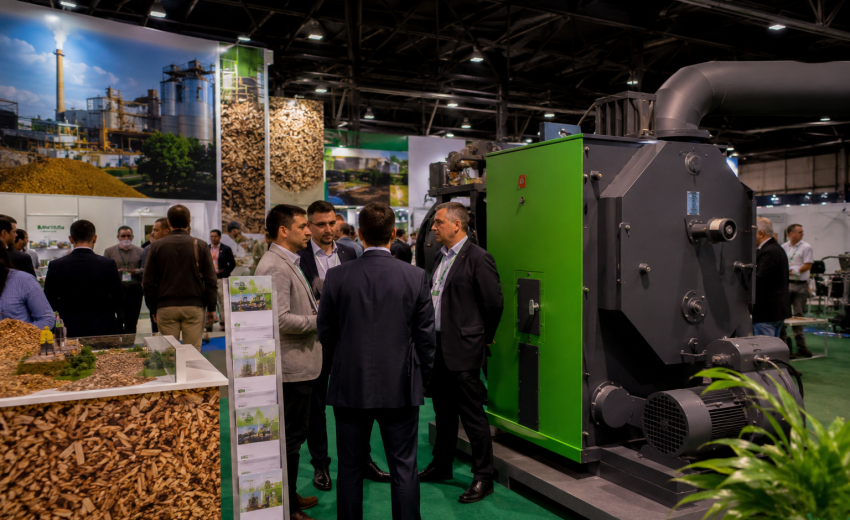
Biomass exhibitions and trade fairs allow manufacturers, plant owners, technology providers, and industry professionals to learn about new technologies, compare equipment, understand market trends, build professional relationships, and identify potential business opportunities. For businesses involved in biomass processing, attending the right industry event can provide practical knowledge that is difficult to gain from online research alone.
For a biomass machine manufacturer or plant owner, exhibitions can bring together machinery suppliers, raw-material specialists, technology companies, project developers, buyers, and other professionals in one place. This makes them useful for understanding where the industry is moving and what technologies may support future growth.
For businesses operating in Rajkot, India, exhibitions can also provide a way to connect with wider Indian and international biomass markets. Ronak Engineering, based in Rajkot, India, operates in biomass briquetting and pellet machinery and manufactures equipment for agricultural-waste processing.
What are biomass exhibitions and trade fairs?
Biomass exhibitions are industry events where companies and professionals showcase, demonstrate, discuss, and explore technologies related to biomass, renewable energy, waste processing, biofuels, and related industries.
Depending on the event, visitors may find:
- Biomass briquetting machines
- Biomass pellet machines
- Drying systems
- Hammer mills and crushers
- Wood chippers
- Biomass boilers
- Material-handling equipment
- Biofuel technologies
- Automation and control systems
- Waste-processing technologies
- Renewable-energy solutions
Trade fairs can also include technical presentations, product demonstrations, networking sessions, seminars, and meetings between buyers and suppliers.
The Global Association of the Exhibition Industry (UFI) describes exhibitions as platforms that bring industries together and create supply-chain opportunities. Its research also highlights education, innovation, networking, and business opportunities as important aspects of modern trade shows.
What are the benefits of biomass exhibitions and trade fairs?
The benefits of biomass exhibitions and trade fairs go beyond simply viewing machines. They can help businesses research technology, understand competitors, meet potential partners, and make better-informed decisions.
1. Discover new biomass machinery and technology
One of the main reasons to attend an exhibition is to see machinery and technologies in one location.
A plant owner researching a new production line can compare different approaches to:
- Raw-material preparation
- Particle-size reduction
- Drying
- Briquetting
- Pelletizing
- Material handling
- Storage
- Production monitoring
Seeing equipment demonstrations can also help visitors understand how machinery works in practical conditions.
Ronak Engineering’s product range includes biomass briquetting machinery as well as equipment such as hammer mills, crushers, and flash air dryers.
2. Understand current biomass industry trends
The biomass sector continues to develop as businesses look for ways to use agricultural and forestry residues more efficiently.
Exhibitions can help manufacturers and plant owners identify trends involving:
- Biomass densification
- Automation
- Energy efficiency
- Production monitoring
- Raw-material processing
- Pellet production
- Briquette production
- Waste utilization
- Equipment maintenance
- Sustainable fuel production
Instead of relying only on older information, visitors can learn what technologies and solutions are currently being discussed within the industry.
3. How biomass exhibitions help machine manufacturers
For manufacturers, exhibitions provide a direct way to understand what customers are looking for.
A machine manufacturer can use an exhibition to:
- Speak directly with plant owners.
- Understand common production challenges.
- Collect feedback about machinery.
- Study competing technologies.
- Identify emerging market requirements.
- Build relationships with distributors.
- Explore international business opportunities.
- Learn about developments in related industries.
This face-to-face interaction can provide valuable market information that may not appear in online searches.
UFI identifies product introductions, sales opportunities, customer relationships, competition analysis, and industry networking among the benefits of trade-fair participation.
Why should biomass plant owners attend trade fairs?
Plant owners should attend trade fairs because equipment decisions can involve significant investment, production requirements, raw-material considerations, and long-term operating costs.
An exhibition allows plant owners to research several areas before making a decision.
Compare equipment options
Rather than researching machines only through brochures, buyers can speak with technical teams and ask questions about:
- Production capacity
- Raw-material requirements
- Power requirements
- Machine configuration
- Maintenance
- Spare parts
- Installation
- Operator training
- After-sales support
For example, Ronak Engineering provides information about raw-material requirements, capacity, infrastructure, manpower, and other operational considerations for its biomass machinery.
Understand the complete production process
A biomass plant is not only about the main briquetting or pellet machine.
Depending on the raw material, a production system may also require equipment for:
Raw material → Size reduction → Drying → Densification → Cooling/handling → Storage
Understanding this complete process can help plant owners identify equipment requirements before planning a new facility or upgrading an existing one.
What can you learn at a biomass machinery exhibition?
Visitors can learn about both machinery and the wider business environment.
Important areas to explore include:
Area | What visitors can learn |
Machinery | Types, configurations, and applications |
Raw materials | Suitable biomass feedstocks and preparation |
Production | Briquetting and pelletizing processes |
Drying | Moisture management and drying systems |
Automation | Monitoring and process-control options |
Maintenance | Service requirements and spare parts |
Markets | Biomass fuel demand and industry developments |
Networking | Suppliers, buyers, distributors, and partners |
This makes exhibitions useful for both beginners researching biomass processing and experienced plant owners evaluating improvements.
What should you prepare before attending a biomass trade fair?
Simply attending an exhibition is not enough. Preparation can make the visit much more productive.
1. Define your objective
Decide what you want to learn before arriving.
For example:
- Researching a new briquetting machine
- Planning a biomass plant
- Looking for pellet production technology
- Finding equipment suppliers
- Exploring export markets
- Comparing machinery
- Learning about raw-material processing
2. Prepare technical questions
Plant owners should prepare questions about their specific operation.
Useful questions include:
- What raw materials can the machine process?
- What particle size is required?
- What moisture level is recommended?
- What is the expected production capacity?
- What utilities are required?
- What maintenance is needed?
- What spare parts are commonly required?
- What training is provided?
- What infrastructure is needed?
3. Bring your raw-material information
If you are planning a biomass project, take information about the available feedstock, such as:
- Material type
- Approximate quantity
- Moisture level
- Particle size
- Seasonal availability
- Current transportation method
This makes technical discussions with machinery suppliers more useful.
How can exhibitions support business networking?
Networking is another important reason to attend biomass trade fairs.
A single event may bring together:
- Machine manufacturers
- Biomass fuel producers
- Plant owners
- Raw-material suppliers
- Equipment distributors
- Project consultants
- Technology providers
- Industrial buyers
- Renewable-energy professionals
These connections can lead to supplier relationships, technical discussions, distribution opportunities, partnerships, or future projects.
For manufacturers, face-to-face communication also provides an opportunity to understand customer requirements more clearly.
How can biomass exhibitions support market research?
Market research is important before investing in machinery or expanding production.
At an exhibition, businesses can gather information about:
- New machinery models
- Production technologies
- Competitor positioning
- Industry applications
- Customer expectations
- Equipment features
- Emerging technologies
- Potential markets
This information can help a business compare its existing production system with newer options.
For a manufacturer in Rajkot, India, participating in relevant industry events can also support connections beyond the local market. Ronak Engineering states that it has exported its biomass machinery internationally and serves customers across global markets.
What should manufacturers look for at biomass exhibitions?
Manufacturers should not focus only on machine appearance. They should evaluate practical and technical factors.
Production capacity
Understand whether the equipment is appropriate for the expected production volume.
Raw-material compatibility
Different biomass materials can have different characteristics. Confirm that the machine and supporting equipment are suitable for the intended feedstock.
Energy requirements
Ask about electrical requirements and operating conditions so the equipment can be evaluated within the planned facility.
Maintenance and support
Ask about spare parts, maintenance schedules, service availability, and operator training.
Complete plant requirements
A manufacturer should consider whether the supplier can support individual machines or a complete production line, depending on the project’s needs.
How can plant owners get more value from trade fairs?
Plant owners can improve the value of an exhibition visit by following a simple process:
Before the event: Research exhibitors and define your objectives.
During the event: Ask technical questions, compare equipment, attend educational sessions, and record useful information.
After the event: Review notes, compare suppliers, request technical documents, and evaluate which solutions fit your project.
This approach turns an exhibition visit into a structured research activity rather than simply a networking trip.
Why are biomass exhibitions important for Rajkot, India businesses?
Rajkot, India has an established industrial and manufacturing ecosystem, making industry knowledge and technology connections valuable for businesses involved in machinery and biomass processing.
For local manufacturers, exhibitions can provide access to broader markets and industry professionals. They can also help companies understand technologies being developed outside their immediate region.
Ronak Engineering identifies itself as a biomass briquetting and pellet machine manufacturer in Rajkot, India, with a business established in 2003 and an international distribution presence.
How can Ronak Engineering help biomass businesses?
Ronak Engineering manufactures biomass briquetting and pellet machinery and related agricultural-waste processing equipment. Its website lists equipment including briquetting machines, pellet machines, hammer mills, crushers, and flash air dryers.
For businesses researching biomass production, understanding the complete equipment chain is important. A suitable machinery solution depends on factors such as raw material, moisture, particle size, production target, available infrastructure, and intended fuel application.
Businesses in Rajkot, India, and elsewhere can therefore use exhibitions as one part of their research process before discussing specific machinery requirements with manufacturers.
Final thoughts
The benefits of biomass exhibitions and trade fairs extend beyond product demonstrations. They give manufacturers and plant owners a chance to learn about technology, understand industry trends, compare solutions, develop professional relationships, and conduct practical market research.
For machine manufacturers, exhibitions can reveal changing customer requirements and new market opportunities. For plant owners, they can make it easier to research equipment, understand production systems, and ask technical questions before investing.
The best results come from attending with clear objectives, preparing technical questions, comparing solutions carefully, and following up after the event.
For biomass businesses in Rajkot, India, and international markets, exhibitions can therefore be a valuable part of ongoing technology research, networking, and business development.
Frequently Asked Questions
1. Why attend biomass exhibitions?
Businesses attend biomass exhibitions to discover machinery, learn about new technologies, understand industry trends, meet suppliers, network with professionals, and research potential business opportunities.
2. What are the benefits of attending biomass trade fairs for plant owners?
Plant owners can compare machinery, ask technical questions, learn about production systems, meet equipment suppliers, and understand developments in biomass processing technology.
3. How do biomass exhibitions help machine manufacturers?
They help manufacturers interact directly with customers, understand market requirements, demonstrate equipment, study competitors, build partnerships, and identify potential markets.
4. What can you learn at a biomass machinery exhibition?
Visitors can learn about briquetting, pelletizing, drying, grinding, material handling, automation, equipment maintenance, raw-material preparation, and other biomass-processing technologies.
5. How should a business prepare for a biomass trade fair?
Businesses should define their objectives, research exhibitors, prepare technical questions, collect information about their raw materials and production requirements, and plan follow-up discussions with relevant suppliers.