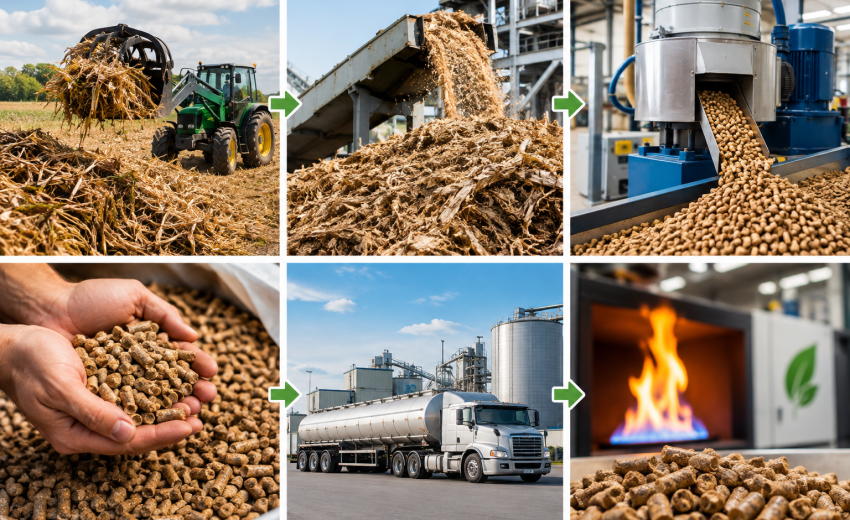
Agricultural waste can become a valuable resource when it is collected, processed, and converted into usable fuel. The biomass briquette supply chain connects farmers, raw-material suppliers, transportation providers, processing plants, fuel manufacturers, and industrial consumers. It helps move agricultural residues from farms to facilities where they can be prepared for energy applications.
For biomass business owners, managing this supply chain efficiently is essential for maintaining production, controlling operating expenses, and delivering consistent fuel quality. A reliable system requires more than access to agricultural waste. Businesses must also plan feedstock procurement, material handling, moisture control, storage, machinery selection, and customer delivery.
In Rajkot, India, businesses exploring biomass fuel production can benefit from understanding how these activities work together before investing in a biomass processing plant.
What Is a Biomass Supply Chain?
A biomass supply chain is the complete process of sourcing, collecting, handling, processing, and distributing organic materials for fuel production or other useful applications.
Agricultural residues, forestry waste, sawdust, crop stalks, rice husks, and groundnut shells are examples of materials suitable for biomass processing. Their suitability depends on moisture content, ash content, particle size, contamination, availability, and the intended application’s requirements.
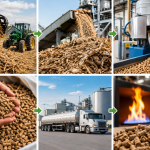
A typical biomass supply chain follows these stages:
- Agricultural residue generation
- Feedstock collection and procurement
- Transportation to collection or processing facilities
- Sorting and quality inspection
- Storage and moisture management
- Size reduction and material preparation
- Drying, where required
- Briquetting or pelletizing
- Finished-fuel storage
- Distribution to customers
Each stage affects the efficiency and economics of the overall operation. Poor planning at the collection stage, for example, can increase transportation expenses and cause raw-material shortages later.
How Does the Biomass Supply Chain Work?
1. Agricultural Waste Collection
The process begins with identifying agricultural residues that can be collected in sufficient quantities. Farms, agricultural markets, food-processing businesses, sawmills, and other processing facilities may provide potential sources of biomass.
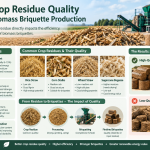
Common feedstocks include rice husk, wheat straw, cotton stalks, groundnut shells, mustard stalks, maize residues, and wood-processing waste.
Before purchasing these materials, businesses should assess their seasonal availability, local market price, moisture content, and suitability for the intended machinery.
A feedstock survey helps answer three important questions:
- How much biomass is available in the target area?
- When is the material available throughout the year?
- Can it be collected and transported at a reasonable cost?
Reliable answers help businesses avoid selecting a production capacity that exceeds the quantity of biomass they can consistently obtain.
2. Biomass Aggregation and Transportation
Agricultural residues are often scattered across multiple farms. Collecting small quantities from distant locations can increase loading, handling, and transportation costs.
Biomass aggregation brings material from different sources to a common collection point or processing facility. This system may involve farmers, local suppliers, cooperatives, transport operators, and biomass aggregators.
Businesses can improve procurement by mapping nearby suppliers, estimating seasonal quantities, arranging collection schedules, and recording the quality of incoming material.
Transportation planning should consider vehicle capacity, road conditions, loading time, fuel expenses, and the distance between collection points and the processing plant.
Because loose biomass can occupy considerable space, businesses should compare the logistics costs of transporting raw material with the costs of processing and transporting the finished fuel.
3. Quality Inspection and Feedstock Preparation
Collected agricultural waste may contain soil, stones, metal pieces, plastic, or other unwanted materials. These contaminants can interfere with processing and damage equipment.
Before production, businesses should inspect incoming material and remove unsuitable contaminants wherever possible.
Important quality parameters include moisture content, ash content, particle size, bulk density, and feedstock consistency. The required specifications vary according to the raw material, machine design, and finished-fuel application.
Proper preparation makes it easier to manage the next stages of the biomass fuel production process.
4. Biomass Storage and Moisture Management
Biomass availability can change according to crop-harvesting seasons. However, fuel customers may require regular deliveries throughout the year.
Storage helps businesses maintain an inventory between periods of supply and demand. Raw materials should be stored in a way that reduces exposure to rain, excessive moisture, contamination, and other avoidable losses.
A suitable storage plan should include:
- Adequate covered storage where necessary
- Ventilation and moisture monitoring
- Separate storage for different feedstocks
- Safe access for loading and unloading
- Stock records and inventory rotation
- Appropriate fire-prevention measures
Moisture management is particularly important because excessive moisture can increase drying requirements and affect processing performance.
The appropriate moisture level depends on the feedstock and the selected production technology. Businesses should establish specifications through material testing and equipment requirements rather than relying on one universal moisture target.
Once the raw material has been collected and inspected, it can move through the processing stages required for the selected product.
5. Size Reduction and Biomass Processing
Some agricultural residues need to be chopped, crushed, or ground before they can be processed further.
Equipment such as chippers, crushers, and hammer mills helps reduce material size and improve feed consistency. The required particle size depends on the feedstock and whether the business intends to manufacture briquettes, pellets, or another biomass product.
A suitable size-reduction system can support smoother material handling and help prepare biomass for drying and densification.
6. Drying and Material Conditioning
Depending on its initial moisture content, biomass may require natural or mechanical drying before further processing.
Industrial drying systems can help prepare material for production when natural drying is insufficient or unsuitable for the required operating schedule.
The choice of drying equipment should consider the incoming moisture level, feedstock characteristics, production capacity, available energy, and operating costs.
Businesses should evaluate the complete preparation process instead of selecting a dryer independently from the rest of the plant.
7. Briquetting and Pelletizing
Briquetting and pelletizing convert suitably prepared biomass into denser solid fuel products.
In briquette manufacturing, prepared material is compressed using a suitable briquetting machine. Pellet production uses pelletizing equipment designed for the required material and product specifications.
Densification can make biomass easier to handle, store, transport, and feed into compatible fuel systems.
A typical production line may include material preparation, drying where necessary, conveying, densification, cooling or stabilization, screening where required, and finished-product storage.
The exact configuration depends on the raw material, required output, product dimensions, and customer specifications.
What Are the Main Challenges in Biomass Feedstock Management?
An effective biomass supply chain must address several operational challenges.
Seasonal Raw-Material Availability
Agricultural residues are often generated during particular harvesting periods. Businesses should identify multiple suitable suppliers and plan inventory around expected seasonal availability.
High Transportation Expenses
Long collection distances and low bulk density can increase logistics costs. Establishing suitable collection points and prioritizing reliable nearby sources can help improve efficiency.
Inconsistent Feedstock Quality
Different materials may require different preparation methods. Testing and recording feedstock quality helps businesses make better decisions about blending, drying, and processing.
Storage and Material Losses
Poor storage can expose raw materials to moisture and contamination. Appropriate storage capacity, monitoring, and inventory controls help reduce avoidable losses.
Production and Customer Demand
Machinery capacity should be matched with realistic raw-material availability and confirmed customer requirements. Producing more fuel than the business can sell may increase storage expenses and working-capital pressure.
How Can Businesses Improve Biomass Supply Chain Efficiency?
Biomass manufacturers can improve operational planning by managing procurement, processing, inventory, and distribution as connected activities.
Develop a feedstock sourcing plan: Identify suppliers, expected quantities, seasonal patterns, and procurement costs before finalizing plant capacity.
Monitor raw-material quality: Record moisture, contamination, and other relevant quality parameters for each incoming delivery.
Optimize transportation routes: Organize collection schedules and evaluate vehicle utilization to reduce unnecessary trips.
Plan storage according to production needs: Estimate the quantity of material required to maintain operations between supply periods.
Choose compatible machinery: Match the crusher, hammer mill, dryer, briquetting machine, or pellet mill to the feedstock and production requirements.
Track production performance: Monitor raw-material consumption, finished output, energy usage, rejected material, and maintenance requirements.
Build relationships with fuel buyers: Understand customer specifications and delivery schedules before scaling production.
These measures help businesses identify operational bottlenecks and make decisions based on actual production data.
What Role Does Machinery Play in the Biomass Supply Chain?
Machinery connects raw-material preparation with the production of marketable biomass fuel. The equipment required depends on the feedstock and the selected manufacturing process.
A biomass processing setup may include:
- Wood chippers or crushers for preliminary size reduction
- Hammer mills for grinding suitable materials
- Dryers for moisture control
- Conveyors for material movement
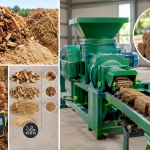
- Briquetting machines for compressed biomass fuel
- Pellet mills for pellet production
- Cooling and screening equipment where required
- Storage and material-handling systems
Ronak Engineering manufactures biomass briquetting and pellet machinery and supporting equipment for biomass processing applications.
When evaluating machinery, business owners should provide details about their feedstock, expected moisture range, available raw-material quantity, target production capacity, required product specifications, and operating conditions.
This information helps determine a suitable equipment configuration for the intended application.
Biomass Supply Chain Opportunities in Rajkot, India
For businesses in Rajkot, India, developing a biomass project begins with identifying suitable local and regional feedstock sources and potential fuel customers.
The wider Saurashtra region includes agricultural and industrial activities that businesses can investigate when assessing biomass availability and market demand. However, the commercial suitability of each feedstock must be confirmed through local sourcing research and material testing.
Before establishing a biomass briquetting or pellet manufacturing plant, entrepreneurs should evaluate:
- Seasonal agricultural residue availability
- Procurement and transportation expenses
- Land and storage requirements
- Machinery and electricity requirements
- Labor and maintenance costs
- Potential customer demand
- Finished-fuel quality specifications
- Working capital and operating expenses
A detailed feasibility study helps determine whether the proposed plant can secure sufficient feedstock and sell its output at commercially viable terms.
How Does a Biomass Supply Chain Support Renewable Fuel Production?
A well-managed biomass supply chain creates a link between agricultural residue management and the production of useful fuel.
Instead of treating every residue as an unwanted by-product, businesses can assess whether suitable materials can be collected and processed for commercial applications.
Briquettes and pellets may serve as fuel in compatible industrial systems, subject to fuel quality, equipment compatibility, and applicable environmental requirements.
However, biomass processing is not automatically profitable or environmentally beneficial in every situation. Transportation distances, processing energy, competing uses for residues, and the emissions of the final fuel system all influence the overall outcome.
Responsible planning should consider these factors alongside production costs and customer demand.
Why Choose Ronak Engineering for Biomass Processing Machinery?
Selecting suitable equipment is an important part of building a practical biomass processing operation.
Ronak Engineering offers biomass briquetting and pellet machinery along with supporting equipment for preparing and processing suitable biomass materials.
Businesses planning a new plant should first assess the feedstock they intend to use, the quality specifications they need to achieve, and the quantity of fuel they expect to manufacture.
These requirements can then guide decisions about machinery selection, material preparation, drying, conveying, and production-line configuration.
For businesses exploring biomass fuel manufacturing in Rajkot, India, a feedstock assessment and production plan provide a practical starting point for machinery discussions.
Conclusion
The biomass supply chain transforms suitable agricultural residues into usable resources through collection, aggregation, transportation, quality control, storage, processing, and fuel distribution.
Each stage influences the reliability and economics of biomass production. Businesses that plan their feedstock sourcing, manage moisture, select compatible machinery, and understand customer requirements are better positioned to develop a workable production system.
For biomass entrepreneurs, the first step is not simply purchasing a machine. It is understanding the complete journey from agricultural waste to finished fuel.
With appropriate planning and suitable processing equipment from manufacturers such as Ronak Engineering, businesses can evaluate opportunities to convert agricultural residues into briquettes or biomass pellets for compatible industrial applications.
Frequently Asked Questions
1. What is the biomass supply chain?
The biomass supply chain includes sourcing, collecting, transporting, storing, processing, and distributing biomass materials or finished biomass fuel.
2. How is agricultural waste converted into fuel?
Suitable agricultural waste is collected, inspected, and prepared. Depending on the process, it may be chopped, ground, dried, and compressed into briquettes or pellets.
3. What materials are used in biomass fuel production?
Potential materials include rice husk, wheat straw, cotton stalks, groundnut shells, maize residues, mustard stalks, sawdust, and other suitable agricultural or wood-processing residues.
4. Why is moisture control important in biomass processing?
Moisture affects drying requirements, material handling, processing performance, storage, and finished-fuel quality. The appropriate moisture specification depends on the feedstock and equipment.
5. What machinery is required for a biomass processing plant?
Depending on the feedstock and product, a plant may require a crusher or hammer mill, dryer, conveyor system, briquetting machine or pellet mill, and suitable cooling, screening, and storage equipment.
6. How can biomass businesses reduce supply chain costs?
Businesses can assess nearby feedstock sources, optimize collection routes, control moisture, reduce handling losses, maintain appropriate inventory, and match machinery capacity with realistic production and demand.
7. Is a biomass briquetting business suitable for Rajkot?
It may be suitable if the business can secure reliable feedstock, control procurement and processing costs, and establish consistent demand for its finished products. A local feasibility study is necessary before investing.
8. How can Ronak Engineering help biomass businesses?
Ronak Engineering manufactures biomass briquetting and pellet machinery and supporting processing equipment. The suitable configuration depends on the raw material, production capacity, and required finished product.