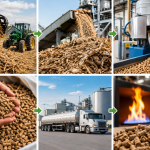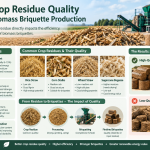
If you’ve ever looked at heaps of crop stubble burning in the fields and wondered if there’s a better way to use it, you’re asking the right question. A biomass pellet plant turns agricultural waste, sawdust, and crop residue into compressed fuel pellets that power plants and industries are now required to buy. With India’s 7% co-firing mandate pushing thermal power stations to use biomass fuel, demand has shot past what current manufacturers can supply. This guide walks you through everything: layout, machinery, costs, subsidies, and a step-by-step plan to help you decide whether this business is right for you.
Why 2026 Is the Right Time to Enter This Market
Let’s get straight to the point: India is short on pellets, and power plants need them now.
Coal-based thermal power plants within 300 km of Delhi are required to co-fire 7% biomass pellets along with coal during FY 2025-26, up from 5% earlier. Plants that don’t comply face heavy penalties. Six non-compliant plants were recently fined over ₹61 crore combined. That’s a strong signal: buyers would rather pay a fair price for pellets than risk fines.
Here’s the gap that matters to you. India’s current pellet production capacity sits around 2.5 million tonnes a year, while the co-firing mandate alone needs somewhere between 15 and 20 million tonnes. That’s a massive shortfall, and it means a new, well-run plant doesn’t need to fight for customers; it needs to focus on quality and consistent supply.
So who should be paying attention?
- Agricultural entrepreneurs sit near paddy, wheat, cotton, or mustard belts with easy access to crop residue.
- Rice mill and ginning mill owners who already have husk, straw, or cotton stalk waste piling up and want to add a profitable second income stream.
- Rural business owners are looking for a manufacturing unit that doesn’t need heavy technical know-how to operate.
If any of that sounds like you, the rest of this guide is built around your situation.
What Infrastructure Does a Biomass Pellet Plant Need?
Setting up the physical side of the business is where most first-timers either save money smartly or waste it. Let’s break down what actually goes into a working biomass pellet manufacturing plant.
How much land do you actually need?
For a small to mid-size unit (1–3 tonnes per hour), you’ll typically need:
- 1,500 to 3,000 square feet of covered shed space for machinery and processing
- Open yard space for raw material storage, this often needs to be 2-3 times your covered area, since biomass is bulky
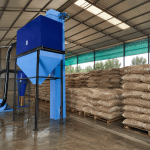
- A separate, ventilated area for finished pellet storage to keep moisture out
What does the basic layout look like?
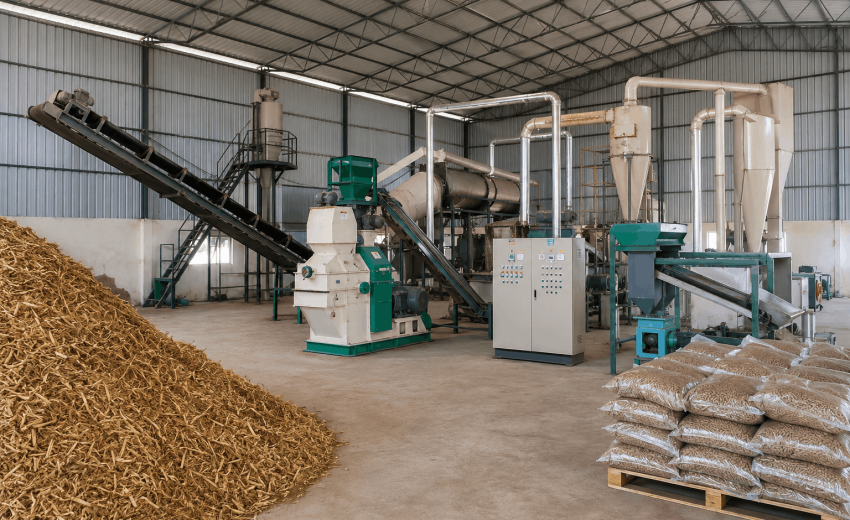
A typical flow runs like this:
- Raw material collection and storage yard
- Pre-processing area (chipping/shredding of large biomass)
- Drying section (lowers moisture content before pelletizing)
- Hammer mill (grinds material into fine particles)
- Pellet mill (compresses material into pellets under heat and pressure)
- Cooling and screening unit
- Packing and dispatch area
Which pellet plant machinery do you actually need?
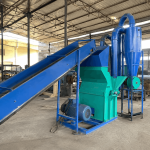
This is the heart of your setup. A standard line includes:
| Machine | Function |
|---|---|
| Chipper / Shredder | Breaks down large biomass into manageable pieces. |
| Rotary Dryer | Reduces moisture content to the 10–15% range needed for pelletizing. |
| Hammer Mill | Grinds dried material into fine, uniform particles. |
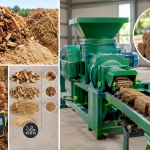
| Ring Die Pellet Mill | Compresses ground material into dense pellets. |
| Pellet Cooler | Cools hot pellets to prevent crumbling during storage. |
| Vibrating Screen | Removes fines and dust before packaging. |
| Packing Machine | Bags of pellets for transport and sale. |
What about power and water?
Most plants of 1-2 TPH capacity need a 15-25 KW power connection, depending on machinery efficiency. Water requirement is minimal since pelletizing is largely a dry process mainly used for occasional cooling and dust suppression.
What’s the Real Cost of Setting Up a Biomass Pellet Plant?
Numbers matter more than anything else in this decision, so let’s look at realistic figures for a biomass pellet plant setup in the 1-3 TPH range.
How much capital investment is required?
| Cost Head | Approximate Range (₹) |
|---|---|
| Land & Shed Construction (if not owned) | 20–40 Lakh |
| Pellet Plant Machinery (1–3 TPH Line) | 60 Lakh – 1.5 Crore |
| Electrical Installation | 3–6 Lakh |
| Working Capital (Raw Material, Wages) | 10–25 Lakh |
| Total Project Cost | ₹1.5 Crore – 5 Crore |
Note: Actual figures vary by capacity, region, and machinery brand. Use this as a planning reference and get a detailed quotation before finalizing your budget.
What returns can you realistically expect?
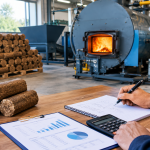
With local feedstock sourcing and a secured buyer (a power plant or industrial boiler operator), a biomass pellet production plant can typically achieve payback within 3 to 5 years. Pellets currently attract 5% GST under HSN code 4401, which keeps the tax burden manageable and supports market adoption.
What should go into your financial project report?
Banks and subsidy agencies will want to see:
- Detailed machinery quotation and capacity justification
- Raw material availability and supply agreement (if possible)
- Buyer commitment letters or a market survey of potential off-take
- Projected profit & loss statement for at least 5 years
- Loan repayment schedule, if applicable
A well-prepared project report isn’t just paperwork — it’s the single biggest factor in getting your loan or subsidy approved quickly.
What Government Subsidies and Loans Are Available?
This is the section everyone wants to read first, so let’s be direct and accurate about it.
Is the central MNRE subsidy still active for new applicants?
Here’s the honest picture. The Ministry of New and Renewable Energy’s Biomass Programme (under the National Bioenergy Programme) has historically offered Central Financial Assistance of up to ₹21 lakh per MTPH (and up to ₹1.05 crore per project) for non-torrefied pellet plants. However, this Phase-I scheme window runs only up to 31 March 2026, and applications received after October 2024 are pending approval under a Phase-II budget allocation. What this means for you: if you’re planning your setup for July 2026 onward, you should treat this CFA as a possible bonus rather than a guaranteed source of funds, and confirm the live status directly on the BioUrja portal (biourja.mnre.gov.in) before finalising your financial plan.
What other funding routes can you rely on between July 2026 and 2027?
- IREDA Financing Scheme: The Indian Renewable Energy Development Agency offers structured term loans specifically for setting up biomass pellet, briquette, and torrefied pellet manufacturing facilities. This is a lending product (not a grant), so it remains available independent of the MNRE subsidy calendar — check current interest rates directly with IREDA.
- Section 80JJA Income Tax Benefit: Businesses processing biodegradable waste into eco-friendly products (like biomass pellets) can claim a 100% tax deduction on profits for 5 consecutive assessment years. This is a standing income tax provision and isn’t tied to the MNRE scheme timeline.
- State Nodal Agency Support: States like Maharashtra (through MEDA), Haryana (HAREDA), Punjab (PEDA), and Madhya Pradesh (MPUVN) run their own capital subsidy or interest support schemes for biomass machinery, often in the 20-30% range of machine cost. [Note: state scheme parameters change frequently — verify directly with your State Nodal Agency for Renewable Energy before applying.]
- MUDRA / PMEGP Loans: For smaller-scale rural units, government-backed MUDRA loans and the Prime Minister’s Employment Generation Programme can help cover machinery and working capital needs without requiring heavy collateral.
The practical advice here: don’t build your entire financial model around the central subsidy. Use it as upside if it comes through, but make sure your project is viable on bank financing and your own capital alone.
How Do You Choose the Right Feedstock and Meet Quality Standards?
Your pellets are only as good as the raw material going into them — and buyers will reject inconsistent batches.
Which biomass sources work best?
- Paddy straw and wheat straw
- Cotton stalks (great option if you’re a ginning mill owner)
- Mustard stalks
- Rice husk and groundnut shells
- Sawdust and wood offcuts
- Bamboo and forest residue
A smart strategy is mixing 2-3 feedstock types rather than depending on one crop season. This protects you from supply gaps during off-season months.
What quality standards should your pellets meet?
If you’re targeting power plants as buyers, your pellets need to meet specific fuel-grade benchmarks:
- Moisture content: Below 10-12%
- Calorific value: Typically 3,800-4,200 kcal/kg for crop-residue pellets
- Ash content: As low as possible, generally under 8-10%
- Bulk density: Around 600-700 kg/m³ for easy handling and storage
While not mandatory, getting BIS certification under IS 17225-6:2016 (for non-woody pellets) gives you a real credibility edge when negotiating supply contracts with power plants and large industrial buyers.
Step-by-Step Plan to Start Your Biomass Pellet Manufacturing Business in India
Here’s the practical roadmap, broken into stages you can actually follow.
- Conduct a feedstock survey. Confirm what biomass is locally available, in what volume, and at what price across the year.
- Decide your plant capacity. Most first-time entrepreneurs start with 1-2 TPH to manage capital risk.
- Finalize land and layout. Whether you’re building fresh or converting existing mill space, plan for storage-heavy layouts.
- Select your machinery supplier. Compare warranty terms, after-sales service, and spare parts availability — not just machine price.
- Prepare your project report and apply for financing. Approach IREDA, your bank, or MUDRA depending on your scale.
- Register your business and apply for approvals (GST registration, pollution control consent, and BioUrja registration if pursuing CFA).
- Install machinery and conduct trial runs. Test different feedstock blends to settle on your standard pellet specification.
- Secure buyer agreements before scaling up production — this protects your cash flow from day one.
- Begin commercial production and pursue BIS certification in parallel for long-term contract eligibility.
Going through this in order — rather than jumping straight to machinery purchase — is what separates entrepreneurs who launch a biomass pellet manufacturing business in India smoothly from those who get stuck halfway through.
Also read: Biomass Pellet Machines in Rajkot for Clean Energy Solutions
Frequently Asked Questions About Biomass Pellet Plants in India
1. How much investment is needed to start a biomass pellet plant in India?
A small- to mid-size plant (1-3 TPH) typically requires ₹1.5 crore to ₹5 crore to cover land, machinery, electrical work, and initial working capital.
2. How profitable is a biomass pellet manufacturing business?
With local feedstock and a secured buyer, most plants achieve payback within 3 to 5 years, helped by steady demand from the power sector’s co-firing mandate.
3. Do I need BIS certification to sell pellets to power plants?
It’s not legally mandatory, but BIS certification under IS 17225-6:2016 significantly strengthens your credibility when negotiating long-term supply contracts.
4. Can rice mill or ginning mill owners convert existing waste into pellets?
Yes — this is actually one of the strongest entry points, since you already have husk or cotton stalk waste and existing infrastructure that can be expanded.
5. Are government subsidies guaranteed for new applicants in 2026-27?
Not guaranteed. The central MNRE scheme’s current phase runs only till March 2026, with future approvals pending budget allocation, so it’s safer to plan your finances around bank loans and state-level support, treating central subsidy as a possible bonus.
Planning your own biomass pellet plant can feel overwhelming with so many moving parts: land, machinery, feedstock, and financing all need to align. Ronak Engineering works closely with agricultural entrepreneurs and existing mill owners across India as biomass pellet machine manufacturers, helping them choose the right machinery configuration for their feedstock and capacity needs from day one.