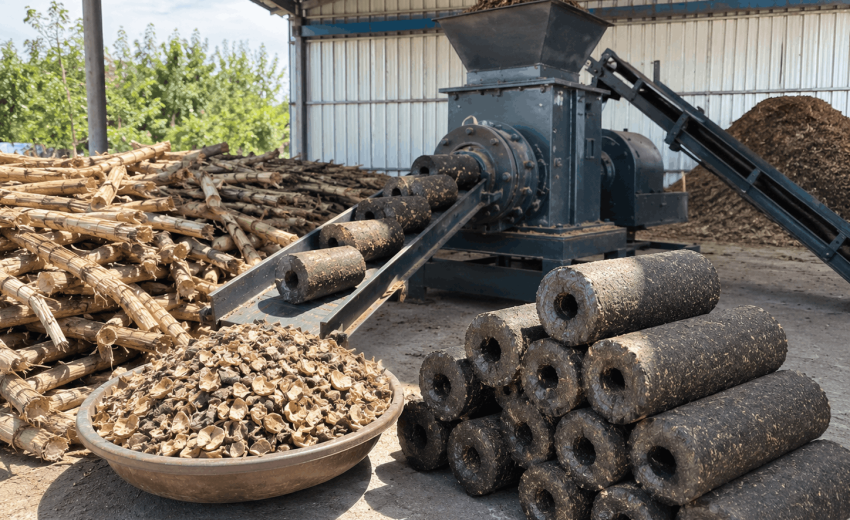
Many farmers, oil mill owners, and rural entrepreneurs in India see cotton stalks and groundnut shells as waste. However, these materials can become a valuable source of income when converted into white coal briquettes. With the right equipment and access to biomass resources, businesses can turn agricultural waste into a fuel that is widely used by industries across India.
If you are researching the groundnut shell briquette machine price, the real question is not just the machine cost. It is about how much profit you can generate by converting low-value crop residue into high-demand industrial fuel. White coal production offers an opportunity to reduce waste, create an additional revenue stream, and support cleaner energy use.
Why are cotton stalks and groundnut shells valuable biomass resources?
India is one of the world’s largest producers of cotton and groundnuts. Every harvesting season generates huge amounts of agricultural residue.
Common biomass resources include:
- Cotton stalks
- Groundnut shells
- Mustard stalks
- Rice husk
- Bagasse
- Sawdust
- Maize stalks
Much of this material is either burned in fields or left unused. Both practices represent lost economic value.
Cotton stalks and groundnut shells have good calorific value, making them suitable raw materials for briquette production. Instead of becoming waste, they can be converted into a marketable fuel used by factories, boilers, and industrial heating systems.
What is white coal, and why is demand increasing?
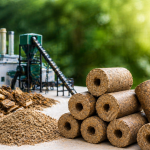
White coal refers to biomass briquettes made from agricultural and forestry waste. These briquettes are compressed under high pressure and can be used as a replacement for coal and firewood in many industrial applications.
Several factors are driving demand:
- Rising coal prices
- Environmental regulations
- Industrial demand for cleaner fuels
- Availability of agricultural waste
- Interest in renewable energy solutions
Industries are increasingly looking for fuels that provide stable heat while reducing environmental impact. White coal meets both requirements.
How does the briquetting process work?
The production process is straightforward.
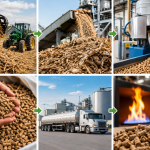
Raw material collection
Agricultural waste is collected from farms, oil mills, and processing facilities.
Size reduction
The material is processed into smaller particles when necessary.
Drying
Moisture levels are reduced to improve briquette quality and production efficiency.
Compression
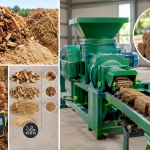
The material is compressed under high pressure using a binderless biomass briquette machine. Natural lignin present in the biomass acts as a binding agent.
Briquette formation
The finished briquettes are dense, durable, and ready for transportation or industrial use.
This process allows businesses to convert low-value biomass into a higher-value fuel product.
Why is the groundnut shell briquette machine price important for profitability?
Many first-time investors focus only on the groundnut shell briquette machine price. While machine cost matters, profitability depends on several additional factors.
Consider:
- Raw material availability
- Electricity consumption
- Labor costs
- Transportation expenses
- Briquette selling price
- Production capacity
A lower machine price does not always mean better returns. Reliability, production output, and operating efficiency often have a greater impact on long-term profits.
When evaluating the groundnut shell briquette machine price, buyers should also consider machine durability, service support, and spare parts availability.
How profitable is white coal manufacturing in India?
Profitability depends on location, raw material cost, and market demand.
Revenue opportunities
Businesses can earn income by:
- Selling briquettes directly to industries.
- Replacing purchased coal with self-produced briquettes.
- Supplying local fuel distributors.
- Creating long-term supply contracts.
Factors affecting profit
| Factor | Impact on Profitability |
|---|---|
| Raw material cost | Higher impact |
| Electricity cost | Moderate impact |
| Machine efficiency | High impact |
| Transportation cost | Moderate impact |
| Briquette selling price | High impact |
| Production volume | Very high impact |
Why are many businesses choosing an agricultural waste briquetting plant?
An agricultural waste briquetting plant helps businesses convert readily available biomass into fuel close to the source of raw material.
Benefits include:
- Reduced waste disposal costs
- Additional revenue generation
- Lower dependence on coal
- Better utilization of agricultural residue
- Cleaner fuel production
An agricultural waste briquetting plant can be established near farming regions where biomass is abundant. This reduces transportation expenses and improves operational efficiency.
Many investors also choose an agricultural waste briquetting plant because it supports long-term sustainability goals while creating a profitable business model.
Which machine is suitable for cotton stalk and groundnut shell processing?
Machine selection depends on production goals and raw material characteristics.
Common options include:
| Machine Type | Suitable Application |
|---|---|
| Mechanical Briquetting Press | High-volume production |
| Hydraulic Briquetting System | Specialized applications |
| Binderless biomass briquette machine | Biomass briquette production |
| Automated Production Line | Large-scale manufacturing |
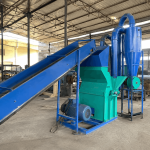
A cotton stalk briquetting press machine is commonly used where cotton residue is available in large quantities.
Because cotton stalks contain natural binding properties, a cotton stalk briquetting press machine can produce durable briquettes suitable for industrial fuel applications.
Businesses in cotton-producing states often choose a cotton stalk briquetting press machine to create value from post-harvest agricultural residue.
Optimising Feedstock: Processing Groundnut Shells vs. Cotton Stalks
To maximise your biomass briquetting plant cost and profit margin, you must understand the handling characteristics of the specific agricultural raw materials available in your area.
| Parameter | Groundnut Shells | Cotton Stalks |
| Gross Calorific Value (GCV) | ~3,800 to 4,200 kcal/kg | ~4,100 to 4,300 kcal/kg |
| Ash Content | ~3% to 10% | ~3% to 5% |
| Pre-Processing Required | Direct feeding or light crushing | Heavy-duty chipping & shredding |
| Moisture Management | High seasonal moisture (requires sun drying/flash dryer) | Naturally drier post-harvest |
Technical Specifications for a High-Output Setup
For a commercial plant aiming to capture lucrative annual supply contracts with major factories or dairy cooperatives, a hobbyist setup will not suffice. The standard baseline for an industrial plant relies on high-capacity machinery designed for reliable, continuous operation.
- Production Capacity: A heavy-duty, automatic industrial briquette press delivers 1,000 to 1,500 kg/hr (1 to 1.5 Metric Tons per hour) of continuous output.
- Power Requirements: These industrial setups typically run on a robust 91 HP three-phase electrical system to handle the dense compression forces needed for high-quality, 90mm diameter cylindrical briquettes.
- Moisture Threshold: For proper binding without cracking, raw material moisture must remain strictly between 8% and 12%. If you are handling fresh groundnut waste, integrating an automatic flash dryer system into your processing line ensures a consistent burn value and protects your equipment from jam-ups.
What role does automation play in modern briquetting?
Automation has improved production efficiency significantly.
Many investors now compare the automatic white coal machine price before purchasing the equipment.
Benefits of automation include:
- Consistent briquette quality
- Lower labor requirements
- Better production control
- Reduced downtime
- Improved safety
Although the price of an automatic white coal machine may be higher than that of a semi-automatic system, many businesses find that improved productivity justifies the investment.
Before purchasing equipment, compare the price of an automatic white coal machine with the expected production capacity and operating costs.
Also read: Why Briquetting Press Machines Are a Smart Investment in India?
Why choose the right supplier?
Choosing the right machinery supplier is often more important than selecting the lowest-cost machine.
A reliable supplier provides:
- Technical guidance
- Installation support
- Spare parts availability
- Operator training
- After-sales service
For buyers looking for the best supplier of Groundnut Shell Briquetting Machines in India, Ronak Engineering has earned a strong reputation by delivering durable briquetting solutions designed for Indian biomass conditions and industrial requirements.
Frequently Asked Questions About White Coal Production
1. What raw materials can be used to make white coal?
Cotton stalks, groundnut shells, rice husk, sawdust, bagasse, and other agricultural residues can be used.
2. Is a binder required to produce biomass briquettes?
Most modern systems use natural lignin in biomass, allowing production through a binderless biomass briquette machine.
3. How do I evaluate the groundnut shell briquette machine price?
Compare production capacity, operating costs, service support, and machine durability rather than focusing only on purchase price.
4. Who buys white coal briquettes in India?
Paper mills, textile units, food processing plants, chemical industries, ceramic manufacturers, and other boiler-based industries are major buyers.
5. Can a small entrepreneur start a white coal business?
Yes. With access to agricultural residue and a suitable market, small and medium-scale entrepreneurs can enter the biomass briquetting industry.
Final Thoughts
India produces millions of tonnes of agricultural residue every year. Instead of treating cotton stalks and groundnut shells as waste, businesses can transform them into a valuable fuel product with strong industrial demand. Whether you are evaluating the groundnut shell briquette machine price, planning an agricultural waste briquetting plant, or exploring opportunities with a binderless biomass briquette machine, the white coal sector offers a practical path toward profitability and sustainable fuel production. For businesses seeking dependable briquetting solutions, Ronak Engineering provides advanced systems designed to help convert agricultural waste into long-term value.