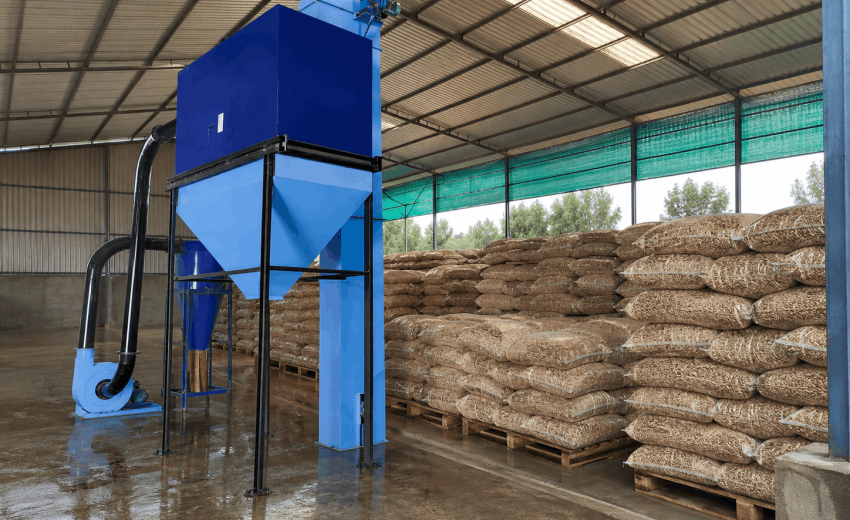
Protecting biomass pellets from water absorption during the Indian monsoon is critical to keeping your plant profitable. High atmospheric humidity during the rainy months causes compressed agro-waste to absorb moisture, expand, and crumble back into dust. To stop biomass pellet degradation, you must drop pellet temperatures to within 3°C to 5°C of room temperature immediately after extrusion, store finished goods in elevated, moisture-sealed spaces, and keep storage humidity below 60%.
Why does monsoon humidity destroy biomass pellet quality?
Biomass pellets are naturally hygroscopic, meaning they pull water vapor directly out of damp air. During the Indian monsoon season (June through September), relative humidity frequently surges past 80%. When stored in unconditioned spaces, high-density fuel pellets absorb this water vapor, leading to rapid deterioration.
High Ambient Humidity (>80%) ──► Pellet Absorbs Vapor ──► Lignin Bonds Weaken ──► Structural Cracking & Fines
When moisture penetrates the outer surface, several costly problems occur:
- Drop in Gross Calorific Value (GCV): Every extra percentage point of water reduces usable heat output. A wet pellet wastes energy evaporating its own internal water rather than generating steam in a boiler.
- Loss of Structural Integrity: Water breaks down the natural lignin binder holding the compressed fibers together. This turns solid cylindrical pellets into loose dust and broken pieces (fines).
- Biological Decay and Mold: Wet organic materials quickly become breeding grounds for fungus and mold, generating internal heat that creates a dangerous self-combustion hazard in storage silos.
- Supply Rejection from Buyers: Power plants and industrial boiler operators strictly enforce quality standards. Shipments exceeding 10% to 12% moisture content face steep financial penalties or outright rejection at the plant gate.
What is the ideal biomass pellet storage environment?
Maintaining strict biomass pellet moisture control requires careful handling from the moment hot pellets exit the pellet mill die until they are burned in a furnace. The following benchmarks keep your fuel within commercial specifications year-round:
| Parameter | Ideal Standard | Monsoon Risk Threshold | Impact of Deviation |
| Finished Moisture Content | 8% – 10% | > 12% | Cracking, reduced GCV, mold growth |
| Ambient Storage Humidity | Below 60% RH | > 75% RH | Rapid surface moisture absorption |
| Pellet Temperature Post-Cooling | Ambient + 3°C to 5°C | > 10°C Above Ambient | Internal condensation inside bags |
| Mechanical Durability Index | > 97.5% | < 95% | Severe dust generation during transport |
How can you protect biomass pellet storage during heavy rainfall?
If you want to maintain high biomass pellet quality throughout the rainy season, you need a proactive, multi-layered protection plan across your facility.
1. Upgrade your biomass pellet storage layout
Never place finished bags directly on bare concrete floors. Concrete wicks ground moisture upward, ruining the bottom layer of your stock.
- Use Plastic or Wooden Pallets: Elevate all stacked bags at least 15 to 20 cm off the floor.
- Maintain Air Gaps: Keep stacked rows at least 1 meter away from exterior shed walls to prevent condensation transfer.
- Enforce Sealed Storage Sheds: Ensure your storage facility features raised plinths, leak-free roofing, and tarpaulin side curtains to block wind-driven rain.
2. Implement smart warehouse ventilation
While good air circulation is necessary, opening warehouse doors during a heavy downpour pulls saturated air straight to your inventory.
- Close all doors and louvers during active rainfall.
- Run industrial exhaust fans only during dryer periods of the day when outdoor humidity dips.
- Use automated IoT moisture sensors to track ambient relative humidity inside your storage shed in real time.
3. Choose the right packaging materials
Standard woven polypropylene (PP) bags allow damp air to pass through their weave. Switch to multi-wall paper bags with plastic liners or heavy-duty 1-ton jumbo bags fitted with inner polyethylene (PE) moisture-proof liners during monsoon months.
Why is post-production cooling the key to moisture control?
Many plant managers assume moisture problems only happen inside the storage warehouse. However, most monsoon degradation actually starts right inside the production line.
When hot pellets leave the pelletizing die, their internal temperatures reach 80°C to 90°C. If you bag these hot pellets immediately, the trapped heat creates internal condensation inside the plastic lining as it meets cooler air outside. This self-generated moisture softens the pellets from the inside out, causing them to crack and crumble within days.
Using an industrial counter-flow cooling system solves this problem. Cold ambient air passes through the warm pellets in a controlled chamber, stripping away excess thermal energy and surface moisture in minutes. Proper cooling hardens the natural lignin binder, locks in structural density, and prepares the product for safe, long-term storage even during high-humidity weather.
Also read: Pellet Cooling System Machine Manufacturer
Frequently Asked Questions
What happens if biomass pellets get wet during transport?
If rain penetrates a shipment, wet pellets rapidly expand, lose their shape, and turn back into loose raw dust. Power plants and industrial buyers will reject the load because wet pellets clog automatic screw feeders and drop boiler efficiency.
What is the maximum acceptable moisture level for commercial biomass pellets?
Commercial buyers and Indian power co-firing guidelines require a final moisture content below 10% to 12%. Keeping moisture within this window guarantees maximum heat output and prevents material breakdown during handling.
How do I measure moisture content accurately on the factory floor?
You can measure moisture using portable digital moisture meters for fast spot-checks during production. For precise lab testing, use the oven-dry method by weighing a sample before and after baking it at 105°C until all moisture evaporates.
Can moldy or degraded pellets be re-processed?
Yes, severely degraded or crumbled pellets can be routed back through your hammer mill and mixed into fresh, dry feedstock. However, this consumes additional electricity and reduces overall plant efficiency.
Is water spray safe for dust suppression near biomass pellet piles?
No. Water spray or plain fogging systems should never be used on biomass pellets because the material is highly absorbent. Use dry fog systems or mechanical dust extraction units instead to manage dust safely.
When building a reliable, high-yield production line, having the right equipment makes all the difference. Located in Shapar (Veraval), Rajkot, Ronak Engineering provides the best pellet cooling system to help biomass producers maintain optimal moisture levels, prevent product degradation, and deliver premium-grade fuel to buyers nationwide.